Can Anyone Plan a Professional Conference? Tales of a Conference Planning Newbie
 Natalie Romano is a Librarian at the Denver Public Library and serves on the Colorado Libraries for Early Literacy (CLEL) steering committee. She holds an MLIS from the University of Denver.
Professional conferences—love ’em? Many of us do, but they can mean something different to everyone. For organizations, they often serve as major sources of revenue, maintaining fiscal solvency and making future conferences financially sustainable.
For attendees, conferences provide structured opportunities for learning, inspiration, and networking. Sharing new information in the field, socializing with friends and colleagues, and enjoying the camaraderie of the profession are just some of the intended outcomes, and conference planners hope to produce a valuable and inspirational event for their colleagues.
When I chaired the Colorado Libraries for Early Literacy (CLEL) conference in 2018, I, along with other members of our steering committee, hoped to design an event that would not only meet the needs of our members, but one that would serve as a long-term planning template for future conferences. Our membership and annual conference have grown over the past few years, and with that growth has come the need for a cohesive strategic vision. Above all else, our intention was to produce a memorable event that would add value to our statewide library community and, most of all, honor CLEL’s founding members, as the 2018 conference was a ten-year milestone for the organization.
As someone who plans library programs, I am familiar with the basics of event planning, but coordinating a conference was something entirely new. Suddenly, my co-chair and I were faced with all logistics of such an event—transportation, parking, and location, among others.
About a year before the conference, I thoroughly researched library conference planning. Initially, I thought it would be easy to locate online and print resources. But almost every resource I consulted was tailored to meet the needs of more corporate-style events, and I found myself discouraged when their timelines and budgets seemed untenable for what CLEL hoped to accomplish.
None of the resources I consulted addressed the needs of library conferences, much less children’s librarian conferences, making my search that much more challenging. As a small professional library organization with modest resources, outsourcing planning was not an option. So, with the time and talent of our steering committee and feedback from the previous year’s conference, we began with a blank template and a lot of great ideas.
As I reflect on the planning process, I am so grateful for the expertise of my colleagues and fellow committee members, and I wonder if there are other conference planners in library land who were faced with some of the same bewilderment I was faced with as a conference planning newbie.
I hope to share my experiences here to help those who are planning a similar event for their colleagues, and to offer my gratitude to the many people who helped the day come together. For reference, our one-day event in October 2018 was planned to accommodate approximately 220 people, and our conference planning committee consisted of a chair and co-chair, with support from our twelve-member steering committee and our fiscal administrator, the Colorado Library Consortium (CLiC).
What Makes a Conference for Children’s Librarians Different?
CLEL is a statewide organization that promotes early literacy experiences in public libraries and in the communities they serve. Equally central to CLEL’s mission is to offer training and professional development for our members, who are early literacy librarians, library staff, and other professionals who work across Colorado and elsewhere.
We support their efforts to provide quality literacy experiences in their communities, and to this end, CLEL has offered an annual conference since its inception in 2008. The diverse activities of our members are reflected in the conference’s programs and sessions and represent the many different types of work that early literacy professionals do, including collection evaluation, process art programs, STEM/STEAM camps, and managing change within their organizations.
The CLEL conference committee received many exceptional session proposals on these and other topics, which informed our decisions about the timing and format of the event.
Working as a children’s librarian is often highly interactive and hands-on. Knowing that conference presentations would reflect a range of presentation types and styles, our goal was to find a venue that could accommodate everything from process art demos to traditional lecture-and-slide presentations. That meant selecting a venue with plenty of tables and several spacious rooms that would inspire a lot of interaction and engagement. Ensuring accessibility for all attendees and providing free parking were at the top of our wish list, along with other details that we hoped would provide a comfortable environment for all.
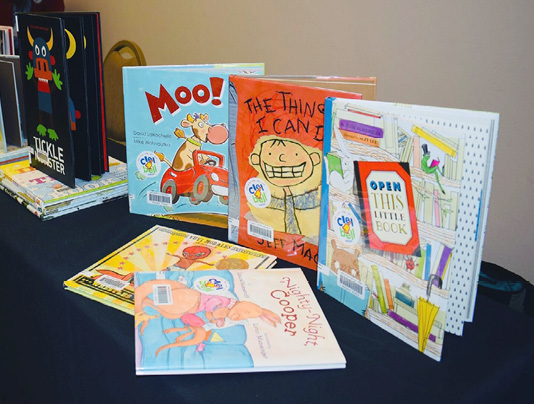
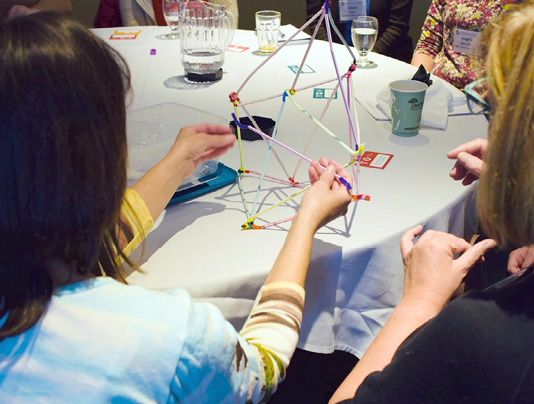
Working on a STEM project.
Selecting a Venue
In my experience as conference chair, the most significant decision was choosing a venue. The venue we selected was very accommodating in helping us minimize costs, but it was still critical for us to be detail-oriented in our search to ensure we compared venues as equitably as possible in terms of pricing and amenities. Venues should be able to provide detailed information about room functionality, food and beverage minimum requirements, day-of technology support, and sample contracts so that fair comparisons between venues can be made. Here are some questions to ask a potential venue:
- What kinds of transportation and shuttle options are available to and from the venue?
- Is overflow parking available, and if so, at what cost?
- What kinds of technical support is offered on-site and is there an additional cost?
- Are there any additional room fees if food and beverage minimums are not met? Offering all-day coffee and afternoon snacks is a great idea, especially if it helps to reach those minimums.
- Do venue staff assist with the transitions between sessions, or is that the responsibility of the planning committee? How much time is required for transitions, like putting up and taking down walls, moving tables, or reconfiguring projectors?
- Are there additional costs associated with setting up tables in the entryway for things like registration and vendors?
- Is there an additional fee for outside food or technology (projectors, laptops) that we bring ourselves or from outside businesses?
- Does the venue have room to grow? If you think your conference might expand over the years, it’s great to find a venue that’s a little bigger than what you need. It never hurts to have extra space!
Realize that no venue is perfect, and you may have to make difficult decisions about weighing conveniences like parking or location against the costs of food and beverage. One strategic decision we made was to offer all-day coffee as a small perk for attendees. It raised our costs slightly, but it helped us avoid additional room fees, which added value without elevating our costs significantly. Increasing conference fees is always an option, but do so with caution.
A venue should be able to help project different outcomes based on cost, attendance, and amenity options; working with our venue on this process took us a few months and many changes were made along the way. These decisions required the consideration and input from the entire committee.
Finances and Sponsorship
Publishers and other businesses in the library industry, both at the local and national levels, can be sources of conference funding. Depending on how much planning time is available and the layout of the venue, offering vendor tables for a fee can help generate some additional revenue. Consider offering businesses the opportunity to advertise their products and services in exchange for their support. Some businesses might be open to funding scholarships for attendees, or specific elements of the conference, like lunch or a keynote presentation. Seeking funding from vendors can be a time-consuming process that requires continuous follow-up, so it might be best to delegate this task to one or two people who have strong fundraising skills. Here are some other things we found helpful while seeking potential sponsors.
- Create an infographic that gives potential sponsors a snapshot of your organization’s mission and goals, and the costs and benefits of each sponsorship level. Canva, the free online design software, is great for making such promotional materials.
- Create a tracking spreadsheet of potential sponsors, their contact information, and any special requests they have regarding the size of tables needed or space for large banners or posters.
- Acknowledge sponsors on social-media channels, your conference website, in conference publications, and with a verbal announcement at the conference. A written thank-you note is also a nice way to recognize sponsors after the event.
Our goal was to make the conference registration fee as affordable as possible for attendees, aiming to stay in a cash-positive position with the hope of also generating a modest profit. With careful planning and input from trusted advisers, we met both objectives, which will help us to manage the expected rising costs of future events.
One thing that can help inform pricing decisions is to see what organizations of similar sizes and types charge for their events, keeping in mind the varying professional development budgets of all kinds and sizes of libraries. Offering scholarships for librarians in districts with limited professional development funds ensures that attendees from all sizes of libraries can participate; our scholarships were made possible by the generous support of the Colorado State Library and CLiC.
Keynotes and More
Finding engaging keynote speakers for the conference was my favorite part of planning the conference. Traditionally, CLEL hosts speakers who have strong backgrounds in early childhood brain development or who have done original research in the area of early literacy programming in public libraries. Selecting speakers gives planners the opportunity to shape the central themes of the conference and can also create an opportunity to recruit speakers in a variety of creative ways.
- Consider asking longtime members to share their stories from previous conferences or other anecdotes from their library careers. Storytelling is a fun way to engage attendees, and no one knows the power storytelling better than librarians!
- Invite speakers from both inside and outside the library industry to share their expertise on unexpected topics. Wellness, organizational change, and even music programs can inspire and energize an audience, especially at the end of a long day of breakout sessions.
- Offer speakers complimentary registration to the conference, if possible.
- Reach out to university professors and researchers, who are excellent resources for finding local experts on topics of interest to librarians. Local colleges and universities can be a great place to start when searching for qualified conference speakers.
- Provide transportation for speakers to and from the venue, especially if they’re from out of town, if possible.
Logistics and Details
Aside from choosing a venue, managing registration and processing payments from attendees is a major part of conference planning. We had the advantage of using our fiscal administrator’s registration platform, which allowed us to take attendee information and payment in one step. However, if an organization doesn’t have such access, a simple Google Form can be used to manage registration information, and depending on financial considerations, billing can be managed separately or even after the event.
Looking back, there are a few things I would have done differently in terms of registration, namely,
- develop a refund policy early, and communicate this clearly on the conference website;
- decide if additional fees should apply for last-minute or transfer registrations;
- consider how the registration platform could help streamline attendee name-badge creation considering all associated costs, like paper and printing; and
- evaluate the amount of time needed to effectively process last-minute registrations.
As the chair of the conference, one of the bigger challenges I faced was deciding how to handle last-minute registration requests. As librarians, we want to be as inclusive and accommodating as possible (everyone is welcome!) and these last-minute requests can sometimes consume a lot of time and energy just days before the conference, which tend to be hectic already.
Our venue was flexible in allowing us to add more attendees to the final head count, but it was important for us to ask about this early in the venue-selection process, as our objective was to avoid turning attendees away at the last minute. Designating one person to respond to these queries can help prevent correspondence from getting lost in the shuffle.
Timelines and Planning
Making a timeline was an essential part of the planning process, not only for the 2018 conference, but for future events as well. My goal was to create a calendar template for future CLEL conference planners to make the process easier and more streamlined, and to help future chairs and co-chairs divide responsibilities and major tasks. To that end, I created a list to help myself and our committee stay on track and held accountable for what needed to be finished for the big day (see table 1).
Potential Pitfalls to Avoid and Tips for Planners
- Delegate, delegate, delegate! Your fellow committee members want to contribute, but they need specific direction on how to help. Be specific about exactly what tasks need to be done and when. Coordinating the registration table, ordering books to put on display, monitoring individual breakout sessions, being on hand to assist with technology snafus, gathering giveaway prizes, and assisting with lunch distribution are just a few day-of tasks for volunteers to tackle. Create a day-of conference task sign-up sheet for volunteers to get ideas and work together.
- Create time for networking and rest. We provided a small window of time for informal networking in the morning, and an extra-long lunch for attendees to have time to catch up. In hindsight, a long lunch wasn’t necessary, but it’s still essential to work some time into the day for attendees to chat with each other or take a break. Conferences are fun and also overwhelming.
- Money matters. Continuously monitoring our budget and all contract payment deadlines was essential. Changes to our food and beverage orders produced several iterations of our venue contract, which necessitated careful and ongoing review of the charges and how they affected our bottom line. It also helped to have an extra set of eyes (or three) cross-checking our contracts and legal agreements with the venue, caterer, and keynote speakers.
- Little things matter. Anticipating that attendees would access our program on their laptops or phones, I didn’t print enough copies of the conference program. This was a huge mistake. Being prepared with plenty of copies of the program is essential. Designating someone to take photos of sessions, presenters, and award winners is also something to arrange in advance, which I would do in the future.
- Don’t sweat the small stuff. Conference planning is a process, and there’s a good chance something will go awry the day of the conference. Be as prepared as you can, but also know that problems can be solved with the help of your venue and your awesome and flexible committee members and colleagues.
Evaluation and Assessment
Perhaps the most useful tool in measuring a conference’s success is attendees’ post-conference feedback. For the 2018 conference, we offered a two-question survey asking attendees to rate the conference on a scale of one to five stars and provided space to share feedback in a short-answer format. We found that this was a bit easier to synthesize than a longer survey, and best of all, people were likelier to respond to two simple questions as opposed to a lengthier questionnaire. We gathered valuable feedback that we hope to integrate into future conferences, helping CLEL to serve its membership and support libraries across Colorado in their mission to promote early literacy.
Without the effort and expertise of our CLEL steering committee and our membership, our conference simply would not have been possible. Much like public library programming, seeing an event come together is exciting, humbling, and fulfilling all at once, and I am grateful to have had the opportunity to be conference chair. I hope that sharing my experience enables me to help others as they plan their own events, and I’d be happy to provide further guidance to anyone who hopes to plan a similar event for their own library organization. &
Table 1. A Sample Twelve-Month Conference Planning Guide
|
Number of Months/Weeks in Advance |
Tasks |
|
12 months |
|
|
8–9 months |
|
|
6–7 months |
|
|
4–5 months |
|
|
2–3 months |
|
|
1–2 months |
|
|
2–3 weeks |
|
Table 2. Facts and Figures
Our venue: The Arvada (CO) Center for the Arts and Humanities
Venue total capacity: about 400
Number of official sponsors: 1
|
Element |
Projected |
Actual |
|
Attendance |
220 |
200 |
|
Cost per attendee |
$60—including light breakfast, coffee, and lunch |
$60—including light breakfast, all-day coffee, and lunch |
|
Budget |
Approx. $10,000 |
Approx. $8,000 |
|
Number of breakout sessions |
12 |
12 |