Incorporating Information Literacy into Youth Book Clubs
 Brooke Sheets is the Senior Librarian for the Children’s Literature Department of the Los Angeles Public Library.
Can you teach information literacy while still offering a fun, engaging book club? Here are some tips for including important information literacy concepts into a book club for older elementary students and tweens, ages nine and up.
- Look for books that feature multiple narrators and character voices, or titles where the same event is looked at from different character perspectives. Discussions about how different characters narrate the same events, or their relationships to each other, can be a foundation for understanding issues of bias and the perception of facts.
- Incorporate heavily illustrated texts and graphic novels into your selections. In addition to being popular with students, this improves the ability to think critically about images. Graphic novels provide a way to talk about composition and how those choices can influence how we think and feel. What did the creator show? What wasn’t shown that your brain fills in? How does the art make you feel and why?
- Add nonfiction to your book club. This can either be your primary text choice or to support a work of fiction. Readers can fact-check historical fiction or learn more about the book’s setting. Using nonfiction helps kids develop research skills and helps them learn how to interpret infographics, charts, diagrams, timelines and more.
- Incorporate discussions of the author and their intent. Bring in news articles, interviews, speeches, or author’s notes to enrich conversations about authorial intent. By looking at more than just the completed work, readers can better understand the creation process.
- Use other library resources such as databases, local history collections, digital archives, or even programs or services in your book club. Learning to use your library’s resources allows for deeper exploration of topics. Participants can learn how information is organized, and you can model how the library can be used as a trusted resource for reliable information and support.
With these tips in mind, here are two book club reading choices with supplemental information literacy activities and discussion questions.
The Wild Robot by Peter Brown
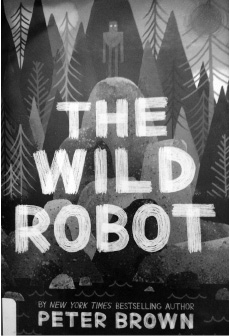
Peter Brown’s The Wild Robot has increased in popularity at my library. There are lots of themes to tackle in this one, so it’s a great choice if your book club meets for several weeks to discuss the same book.
Activity 1
Read or listen to an interview with Peter Brown. Student-friendly interviews include one on BN KidsBlog (www.barnesandnoble.com/blog/kids /an-interview-with-the-wild-robot-author-peter-brown) and Book Club for Kids (https://bookclubforkids.libsyn.com/peter-brown-on-writing).
Sample discussion questions:
- “Peter Brown is a writer and an illustrator. How do the pictures change what you think about the story?”
- “Does hearing about how Peter came up with the idea for this story change how you think about it? Why or why not?”
Activity 2
Explore robotics, coding, and STEAM. Show off your 3D printer, makerspace, or coding classes. With internet access, students can practice coding on websites like code.org. Coding can help launch a discussion about artificial intelligence.
Sample discussion questions:
- “What was Roz’s purpose? What was her program? What would you program Roz to do?”
- “Do robots like Roz exist today? How are the same or different?”
Wonderstruck by Brian Selznick
Historical fiction can sometimes be a hard sell for students in my community, and the size of Selznick’s books can be intimidating for even strong readers, but the relatable stories and significant amount of illustrations in Selznick’s works hook readers. Book clubs are a great place to make this work accessible.
Activity 1
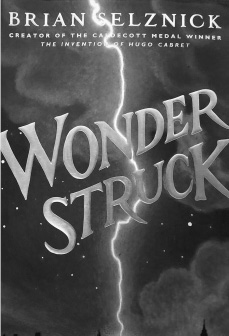
In Wonderstruck, Rose’s story is told entirely through illustrations. Spend some time talking about the book’s format how these choices impact the narrative.
Sample discussion questions:
- “Ben’s story is told in words, and Rose’s story is told in pictures. Which section do you prefer? Why? Which character do you understand better?”
- “There are written words in some of Rose’s story. Did you read them? Were they necessary to understand her story?”
Activity 2
Selznick’s acknowledgments in the book are filled with indications of all the research he did. Explore the note with students, and research some of the topics within. Use this as a starting point for students to share in the research process. Find books on American Sign Language, learn what life was like in the 1920s, or even show silent films. If you have books listed in Selznick’s extensive selective bibliography, you can share those as well.
Sample discussion questions:
- “Find a photo of Queens Museum of Art’s Panorama. Where did you find it? How does it compare to the book’s illustration?”
- “How did Brian Selznick learn about Hoboken, New Jersey? What are some sources you could use to learn about Hoboken?” &