It Takes Two (Or More): Developing Partnerships to Serve Marginalized Populations
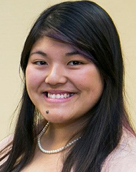
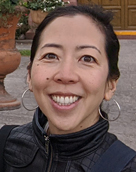 Melody Leung is a Children’s Librarian with the Whatcom County (WA) Library; Marika Jeffery is a Youth Services Librarian with the San Diego Public Library.
This student-edition column features the work of students in a course taught by Dr. Tess Prendergast at the School of Information, University of British Columbia.
As our name suggests, the Library Service to Underserved Children and Their Caregivers (LSUCTC) committee seeks to help library staff better serve children and families who are often marginalized and overlooked by traditional library programs and services. A significant part of our committee’s work is focused on developing toolkits that provide resources and ideas for assisting a variety of these overlooked demographics,1 and we encourage readers to visit our toolkits here: tinyurl.com/lsuctctoolkit.
One major difficulty in reaching underserved populations is due to our own ignorance.
- How can we serve marginalized communities when we don’t see them inside our buildings and/or have little knowledge of their needs and concerns?
- How can we ensure authentic connections where we are not forcing our personal values or making assumptions about whole groups of people?
- How does our personal understanding and our organization’s understanding of equity, diversity, and inclusion (EDI) help us to evaluate our current programming and evaluation methods?2
One answer is to create partnerships with those who have a strong knowledge base of these underserved communities and can guide library staff in best practices for outreach. Whether you reach out or the organization approaches you, it’s vital to plan and design outreach with your partner to find common values.3 This relationship will help both groups feel fully invested in the partnership and desired outcomes.
Research Your Community
Consider demographics, but also connect with individuals outside the library. Survey your landscape to see what organizations are in your vicinity—schools, religious institutions, homeless shelters, agriculture, specialty stores, and local businesses. Remember that underserved communities are likely not your regular visitors. If possible, connect with staff or community members who are either familiar with or a member of these underserved communities. Ask yourself:
- Who is the library not serving? What barriers are preventing these groups from accessing library services?
- Do the library’s values overlap with this community’s values? If this answer is no, analyze how the library’s culture may need to change or if this underserved community actually doesn’t benefit from current library services.
When you’ve found a potential partner, determine a common outcome based on shared values.
- What goals or values do you each have and where do they overlap?
- What impacts and outcomes do you both hope to achieve?
- What do you each bring to the table and how can you complement each other?
Evaluate
Programs and events have a start and an end, but outreach is flexible. If the first idea isn’t successful, the community will still be there. It’s easy to get discouraged when a program loses traction or the library’s relationship with a community partner changes. When planning and conducting outreach, it’s important to think of the work as a cycle with the only unchanging element being the community you aim to serve. When evaluating your outreach, keep these questions in mind.
- What type of casual feedback did you obtain? Were there any barriers that prevented those families or others from participating?
- What impacts and outcomes did you achieve? Were they the same as what you had originally planned?
- If attendance was low, did you put enough effort into marketing in places where your underserved community frequents or trusts? Remember that attendance numbers aren’t equal to success.
We encourage you to check out our committee’s toolkits (particularly the “Professional Resources” and “Community Resources”) at http://www.ala.org/alsc/sites/ala.org.alsc/files/content/professional-tools/lsspcc-toolkit-2015.pdf. If you have questions, ideas, or would like our committee to focus on a particular underserved group, please email lsuctc@gmail.com. &
References
- Jaime Eastman and Joe Prince, “Providing Timely Resources for Underserved Populations,” Children and Libraries 19, no. 1 (Spring 2021): 34–35.
- Office for Diversity, Literacy, and Outreach Services (ODLOS), “ODLOS Glossary of Terms,” American Library Association, accessed February 14, 2021, http://www.ala.org/aboutala/odlos-glossary-terms.
- Project Voice, “Project Voice Training Series Webinar 2 Designing Community Outreach Using Value-Centric, Outcomes-Based Planning and Assessment,” May 7, 2020.