Speech-Giving and the Woman Suffrage Movement: Exploring Government Databases for Women’s Voices
This article addresses the Woman Suffrage Movement of the 19th century and its continued significance through the exploration of primary source government documents that largely focus on speeches delivered by women, such as Isabella Beecher Hooker, to Congress and current documents that inform these speeches through relevant historical contexts, such as the Equal Rights Amendment. The goal of engaging with these government documents in this way is to encourage increased accessibility of government information relevant to the Woman Suffrage Movement in teaching and learning within libraries and the US K-12 education system.
The Woman Suffrage Movement in the United States was a major milestone in women’s fight for political, social, and economic equality.1 The movement can be traced back to the mid-19th century when a small group of women began advocating for women’s rights. In 1848, a group of women, including Elizabeth Cady Stanton and Lucretia Mott, organized the first women’s rights convention in Seneca Falls, New York. At the convention, they issued a “Declaration of Sentiments,” modeled after the Declaration of Independence, that demanded women’s right to vote and women’s equality with men.2 The document asserted that women had the same rights as men and called for the end of woman’s oppression.
It wasn’t until the late 19th and early 20th centuries that the Movement gained momentum. The National American Woman Suffrage Association (NAWSA) was formed in 1890, and it became the largest and most influential organization in the Woman Suffrage Movement.3 This organization was the result of the union of the National Woman Suffrage Association (NWSA) and the American Woman Suffrage Association (AWSA). The two organizations merged in 1890 to form the National American Woman Suffrage Association (NAWSA) with Elizabeth Cady Stanton as its first president. After decades of suffragists’ campaigning and lobbying, the 19th Amendment was passed through a joint resolution of Congress.4 The resolution was first introduced in Congress in 1878, but it took more than four decades of suffragists’ persistent activism through lobbying Congress and campaigning at the state and federal levels before it was finally passed.5
The suffragists used various tactics to achieve their goal—one of which was public speaking before Congress. Women’s rights conventions and gatherings were organized by activists, such as Elizabeth Cady Stanton, Susan B. Anthony, and Lucretia Mott, who spoke on various issues affecting women, including voting rights. The main message of suffragist speeches was the need for women’s political equality and the right to vote, such as in the following list of suffragist speeches:
- Statement of Isabella Beecher Hooker, 18786
- Statement of Elizabeth Cady Stanton, 18787
- Statement of Susan B. Anthony, 18888
- Statement of Elizabeth Cady Stanton, 18889
- Statement of Lucy Stone, 189210
- Statement of Isabella Beecher Hooker, 189211
Women argued that they were citizens of the United States and deserved the same rights and privileges as men. Suffragist speeches emphasized the need for women to have a voice in decisions that affected their lives and the importance of women’s opinions in politics and governance. The suffragist speeches presented to Congress advocated for the Woman Suffrage Movement in an effort to persuade lawmakers to support women’s suffrage and equal rights.12 The speeches presented to Congress contributed to the eventual passage of the 19th Amendment, which granted women the right to vote in 1920. Although it took several decades for women’s suffrage to be achieved, the speeches presented to Congress helped to lay the groundwork for this historic achievement.
Notable Female Figures of the Woman’s Suffrage Movement
Isabella Beecher Hooker’s (1822-1907) involvement in the Woman Suffrage Movement began in the 1860s when she joined the NWSA.13 She was a vocal and active member of the organization, advocating for women’s political rights and equality. She was particularly interested in the intersection of religion and suffrage and believed that the Bible supported women’s rights. In her address to the Committee on the Judiciary in 1892, she reminds the lawmakers of the “old Jewish words [they] read in the Decalogue” regarding honoring one’s parents.14 She asserts that “if we want to help the Republic, and if we want to perpetuate the institutions our fathers brought across the water, we have got to honor the mothers equally with the fathers in the Government.”15 She used her knowledge of theology to argue that women were equal to men in the eyes of God and therefore deserved the same rights and privileges as men. In 1869, she was elected president of the Connecticut Woman Suffrage Association (CWSA), where she worked to promote suffrage and women’s rights through various speeches.16
Victoria Claflin Woodhull (1838-1927) was an American suffragist, social reformer, and entrepreneur who was a prominent figure in the Woman Suffrage Movement of the 19th century.17 According to Kate Havelin’s monograph, Victoria and her sister, Tennessee, opened their own brokerage firm on Wall Street in 1869, making them the first women to operate a brokerage firm in the United States. They quickly became successful and were able to use their wealth to support the Woman Suffrage Movement.18 Victoria’s involvement in the Woman Suffrage Movement began in the 1860s. In a speech given before the Senate and House of Representatives of the United States Congress in 1870, she declared that “the continuance of the enforcement of said local election laws, denying and abridging the right of citizens to vote on account of sex, is a grievance to your Memorialist and to various other persons, citizens of the United States, being women.”19 This memorial was the first speech delivered to Congress by a woman.20 In 1872, Victoria made history when she became the first woman to run for President of the United States on the Equal Rights Party ticket. Her candidacy was controversial and attracted both support and criticism.21
Elizabeth Cady Stanton’s (1815-1902) involvement in the Woman Suffrage Movement began in the 1840s when she attended the World Anti-Slavery Convention in London with her husband, Henry Stanton.22 There, she met other women who were also fighting for social justice, including Lucretia Mott, with whom she formed a lifelong friendship and partnership.23 In 1869, she co-founded the National Woman Suffrage Association (NWSA) with Susan B. Anthony who was one of her closest friends.24 Stanton was also instrumental in organizing the Seneca Falls Convention in 1848, which is regarded as the birthplace of the Woman Suffrage Movement.25 In the late 1860s and early 1870s, Stanton worked to secure congressional hearings on women’s suffrage, believing that this would help to draw attention to the cause and build support for the Movement.26 In a powerful, yet brief, speech before the Senate Committee on Woman Suffrage in 1888, she states that
the fact that the pronoun “he” is used in various provisions of the Constitution does not decide that man alone is referred to, for in the whole criminal code the pronouns are “he,” “his,” “him.” Surely if women can be made to pay all the penalties of violated law as “he,” she might be permitted to enjoy all the privileges of a citizen as “he.” If a woman can hang as “he,” she might vote as “he.”27
She continued to be a vocal and active member of the Woman Suffrage Movement for the rest of her life.
Susan B. Anthony (1820-1906) believed that women deserved the right to vote because they were equal to men in intellect and ability. She worked tirelessly to advance the cause of women’s suffrage, giving speeches, and working alongside her friend, Elizabeth Cady Stanton, as one of the prominent leaders of the Movement.28 Anthony’s activism led to her arrest in 1872 when she attempted to vote in the presidential election. She was found guilty of illegally voting and was fined.29 United States v. Susan B. Anthony was a landmark case in the history of the Woman Suffrage Movement in the United States.30 Despite her conviction, Anthony continued to advocate for women’s suffrage and to fight for equal rights for women. Before the Senate Committee on Woman Suffrage in 1888, she delivered a speech demonstrating the suffragists’ resilience.31 To her audience, she states that the hearing
rounds out the first forty years since woman began to make a public demand for enfranchisement in this country, and therefore it is fitting that your honorable committee shall make this hearing mark this epoch by thus publishing the report of the proceedings. I wish you would ask leave to publish a hundred thousand copies, that we might have them sent to every school district of the United States. But if you can not [sic] bear to have the Government do so much for the women of this Republic and of this world, [I] ask for the largest number that the law will allow you to get.32
Even though she would never see the passing and ratification of the 19th Amendment, she continued to be an inspiration to the suffragists until her death.
Women’s rights in the US Constitution
While the work of the suffragists was monumental in paving the way for women’s rights, it was only the beginning of what has become an ongoing fight.33 The 19th Amendment to the United States Constitution, which granted women the right to vote, is the only women’s right explicitly mentioned in the Constitution. It has significantly impacted American society by increasing women’s political power. However, the fact that it is the only women’s right poses several negative consequences to women, such as limited constitutional protection and inconsistent laws across states. It has created a perception that women’s rights are not as important or fundamental as other rights that are more pervasively represented in the US Constitution.34
Additionally, the lack of women’s rights in the Constitution has made it more difficult to address issues of gender inequality in areas such as employment, education, and reproductive rights. The absence of these rights in the Constitution has also made it easier for lawmakers to pass laws that discriminate against women without violating the Constitution, such as the overturning of Roe v. Wade.35 The fact that the 19th Amendment is the only women’s right underscores the ongoing need for the fight for gender equality. While progress has been made in the decades since the passage of the 19th Amendment, there is still a long way to go to achieve full gender equality in all areas of society. There is a need for continued efforts to secure additional women’s rights and protections in the Constitution and the legal system. This includes efforts to pass the Equal Rights Amendment (ERA), a proposed constitutional amendment in the United States, which would guarantee equal rights for all American citizens regardless of sex.36 The ERA was originally introduced in the 68th Congress in 1923, reintroduced in subsequent Congresses, approved by Congress in 1972, and sent to the states for ratification with a deadline of 1979, which was later extended to 1982.37 By 1982, the deadline passed and the amendment had been ratified by only thirty-five states instead of the required thirty-eight states. The ERA was reintroduced to Congress post-deadline in 1982 but no action was taken. The lack of action may be due, in part, to the controversy over the deadline. In a 2021 Congressional hearing, Representative Clyde of Georgia cited the late Justice Ginsberg as noting that “the only way the ERA can be added to the Constitution would be to introduce it anew.”38 Yet, near the beginning of the Congressional hearing, Chairwoman Maloney states the following:
In 2017, Nevada voted to ratify, Illinois followed in 2018, and Virginia in 2020. Thirty-eight state legislatures have voted to ratify the ERA, meeting the constitutional requirement, but the ERA still does not appear in the Constitution, and this has to change. Federal law directs the archivist of the U.S. to certify and publish amendments that have met the requirements laid out in Article V of the Constitution. This is purely a ministerial duty, which should be done automatically. But under President Trump, the Department of Justice issued an opinion advising the archivist not to certify the ERA. Today I am releasing a letter from preeminent legal scholars stating that this Trump-era legal opinion is legally erroneous and should be withdrawn. These scholars also make clear that the time limit in the preamble to the ERA is not an obstacle to ratifying the amendment. This time limit was not included in the amendment itself, and there is no time limit on equality.39
In addition to conflicting opinions and perspectives on the ERA, the unresolved confusion over the deadline contributes to the delay of the ERA being added as an amendment to the Constitution. Since 1982, the ERA has been reintroduced to Congress every single year.40 The significance of this amendment lies in its ability to provide constitutional protection of gender equality, to advance the intersectionality of gender equality and other forms of discrimination, and to inspire legal and social change that addresses systemic discrimination. The history of the suffragists in the documentary sources of the United States validates the ongoing effort to fight gender inequality and women’s rights by changing our laws. The Equal Rights Amendment and suffragists share a common goal of advancing women’s rights and promoting gender equality. The ERA can be seen as a continuation of the suffragists’ fight for women’s rights as well as a challenge against gender-based discrimination. It seeks to realize the vision and goals of the suffragists by advocating for equal treatment and legal protections for American citizens no matter their sex, gender, or race.
Incorporating Women’s History in Education
Primary sources documenting the ERA and Woman Suffrage Movement are important in teaching and learning about United States history and civics. Increased accessibility of historical information and primary sources about the ERA and the suffragists of the 19th and 20th centuries would help preserve the suffragists’ legacy and contributions to American society. By learning about the activists who fought for women’s right to vote, students and adults gain insight into the barriers and discrimination faced by women in the past and the beginnings of the ERA. Including the Woman Suffrage Movement and ERA in K-12 history and civics classes can promote a more inclusive and equitable education, foster an informed and engaged citizenry, and instill a sense of civic duty that encourages political engagement and prepares students to participate in the democratic process as informed and responsible citizens. Libraries could provide online guides based on the research sources discussed and provided in this article to illustrate women’s history, equality, civil rights, and elections. Moreover, it would help learners understand the ERA in the context of suffragist history and the significance of Congress’s continued failure to pass the original Equal Rights Amendment or to reintroduce the ERA for ratification.
Conclusion
The Woman Suffrage Movement and the ongoing fight for the Equal Rights Amendment (ERA) the enduring struggle for gender equality in the United States. The suffragists of the 19th and 20th centuries used their speeches and activism to challenge prevailing societal norms and to advance the cause of women’s rights. Their speeches, campaigns, and unwavering dedication laid the foundation for the eventual passage of the 19th Amendment, a significant milestone in the pursuit of political equality. However, the fight for gender equality continues, as evidenced by the need for the ERA to provide constitutional protection for gender equality. The Constitution’s limited representation of women’s rights and the ongoing struggle for gender equality highlight the need for continued efforts to secure additional rights and protections. The ERA seeks to build upon the suffragists’ legacy by advocating for equal treatment and legal protections for all citizens, regardless of their sex, gender, or race. Incorporating the history of the suffragists and the ERA into educational curricula and promoting access to primary sources ensures that future generations understand the ongoing struggle for gender equality and feel empowered to participate in shaping a more inclusive and equitable society in the United States.
Notes
- For a history of women’s suffrage, see Kaleena M. Beck, “A History of Women’s Fight for Equality,” Advocate 63, no. 11/12 (November 2020): 12–15, https://tinyurl.com/23z9x64w; for a comprehensive account of women’s history, see Nancy A. Hewitt and Anne M. Valk, A Companion to American Women’s History (Hoboken, NJ: John Wiley & Sons, 2021), chapters 7–12 are particularly relevant to the woman suffrage movement; for a more diverse representation of the women who contributed to the Movement, see Susan Ware, Why They Marched: Untold Stories of the Women Who Fought for the Right to Vote (Cambridge, MA: The Belknap Press of Harvard University Press, 2019); for a wide range of essays on the Movement, see Dawn Durante and Nancy A. Hewitt, 100 Years of Women’s Suffrage: A University of Illinois Press Anthology (Urbana: University of Illinois Press, 2019).
- First Convention Ever Called to Discuss the Civil and Political Rights of Women, Seneca Falls, New York, July 19, 20, 1848, Library of Congress, https://tinyurl.com/2me8d89m.
- The NWSA was founded in 1869 and focused on advocating for women’s right to vote through a constitutional amendment, which was generally seen as an aggressive approach. The AWSA was founded in 1869 and took a more moderate approach, working to secure women’s voting through state legislation. For additional historical context regarding this union, see the primary source Rachel Foster, editor, Negotiations between the American and National Woman Suffrage Associations in Regard to the Union (n.p.: 1888), 2–3, this source details the negotiations between the two organizations.
- For a detailed record of this account, see the primary source Susan B. Anthony et al., History of Woman Suffrage (1881–1922), particularly volume 4 as it contains relevant material to the split between the organizations and their eventual union into the NAWSA, https://tinyurl.com/msk5ayms; this source is a six-volume book series that documents the history of the Woman Suffrage Movement in the United States. It was edited by Elizabeth Cady Stanton, Susan B. Anthony, Matilda Joslyn Gage, and Ida Husted Harper.
- Joint Resolution Proposing an amendment to the Constitution extending the right of suffrage to women, H.J. Res. 1, 66th Cong. (1919), https://tinyurl.com/2p99ry8s; see also Anthony, History of Woman Suffrage, especially volume 6 as it includes a detailed history of the passage and ratification of the constitutional amendment.
- Arguments on Behalf of a Sixteenth Amendment to the Constitution of the U.S. Prohibiting the Several States from Disfranchising U.S. Citizens on Account of Sex and Protest Against Woman Suffrage: Hearing Before the S. Comm. on Privileges and Elections, 45th Cong. 42 (1878) (statement of Mrs. Beecher Hooker) https://tinyurl.com/5xzkdrht.
- Arguments in Behalf of a Sixteenth Amendment to the Constitution of the U.S. Prohibiting the Several States from Disfranchising U.S. Citizens on Account of Sex and Protest Against Woman Suffrage: Hearing Before the S. Comm. on Privileges and Elections, 45th Cong. 4-17 (1878) (statement of Mrs. Elizabeth Cady Stanton) https://tinyurl.com/5xzkdrht.
- Hearing Before the Committee on Woman Suffrage: Hearing Before S. Comm. on Woman Suffrage, 50th Cong. 18 (1888) (statement of Susan B. Anthony) https://tinyurl.com/2fvph95j.
- Hearing Before S. Comm. on Woman Suffrage, 50th Cong. 3 (1888) (statement of Elizabeth Cady Stanton) https://tinyurl.com/36msn6v6.
- Hearing of the Woman Suffrage Association: Hearing Before the H. Comm. on the Judiciary, 52nd Cong. 5 (1892) (statement of Lucy Stone) https://tinyurl.com/3fhz27md.
- Hearing of the Woman Suffrage Association: Hearing Before the H. Comm. on the Judiciary, 52nd Cong. 8 (1892) (statement of Isabella Beecher Hooker) https://tinyurl.com/yckt26xn.
- Supra note 5.
- For a comprehensive account of Isabella’s life, religious upbringing, and contribution to the Movement, see Barbara A. White, The Beecher Sisters (New Haven: Yale University Press, 2003), 1–24, 127–53.
- Hearing of the Woman Suffrage Association: Hearing Before the H. Comm. on the Judiciary, 52nd Cong. 8 (1892) (statement of Isabella Beecher Hooker), 5 https://tinyurl.com/yckt26xn.
- Supra note 8.
- Supra note 7.
- For further information and context on Victoria Claflin Woodhull, see Kate Havelin, Victoria Woodhull: Fearless Feminist (Minneapolis: Twenty-First Century Books, 2007); Ellen F. Fitzpatrick, The Highest Glass Ceiling: Women’s Quest for the American Presidency (Cambridge, MA: Harvard University Press, 2016); and Joan Marie Johnson, Funding Feminism: Monied Women, Philanthropy, and the Women’s Movement, 1870-1967 (Chapel Hill: University of North Carolina Press, 2017).
- Havelin, Victoria Woodhull, 26–35.
- Victoria C. Woodhull, The Human Body the Temple of God: or, The Philosophy of Sociology (London: Hyde Park Gate, 1890), 91.
- Victoria C. Woodhull, Selected Writings of Victoria Woodhull: Suffrage, Free Love, and Eugenics, ed. Cari M. Carpenter (Lincoln: University of Nebraska Press, 2010), 21.
- Woodhull, Selected Writings of Victoria Woodhull, 36–41.
- Elisabeth Griffith, In Her Own Right: The Life of Elizabeth Cady Stanton (New York: Oxford University Press, 1984), 3-13.
- Griffith, In Her Own Right, 30–46.
- Griffith, In Her Own Right, 72–74.
- Griffith, In Her Own Right, 51–56.
- Griffith, In Her Own Right, 118–44.
- Hearing Before S. Comm. on Woman Suffrage, 50th Cong. 3 (1888) (statement of Elizabeth Cady Stanton), 5 https://tinyurl.com/36msn6v6.
- Mary Margaret Huth and Christine L. Ridarsky, Susan B. Anthony and the Struggle for Equal Rights. Gender and Race in American History (Rochester, NY: University of Rochester Press, 2012).
- United States v. Anthony, 24 F. Cas. 829 (Circuit Court of New York 1873), https://tinyurl.com/yjwbdbhz.
- Supra note 23.
- Hearing Before the Committee on Woman Suffrage: Hearing Before S. Comm. on Woman Suffrage, 50th Cong. 18 (1888) (statement of Susan B. Anthony), https://tinyurl.com/2fvph95j.
- Supra note 25.
- For a source that provides context on the fight for ongoing fight for women’s rights, see Paula A. Monopoli, Constitutional Orphan: Gender Equality and the Nineteenth Amendment (New York: Oxford University Press, 2020).
- Cong. Rsch. Serv., Constitution of the United States of America: Analysis and Interpretation, S. Doc. No. 112-9 (2012 & Supp. 2017), https://tinyurl.com/mupk97zc, especially pages 1934–51, which gives a comprehensive history of abortion laws, how complicated they are, how many restrictions are added to a woman’s right to abort a pregnancy, and how a woman’s right to decide her own reproductive health is ongoing. See also, Leslie W. Gladstone, Cong. Rsch. Serv., Selected Women’s Issues Legislation Enacted Between 1832-1988 89-514 GOV (1989) https://tinyurl.com/z7tsj8rr; Karen J. Lewis, Cong. Rsch. Serv., Legal Analysis of the Potential Impact of the Proposed Equal Rights Amendment (ERA) on the Right to an Abortion or to the Funding of an Abortion 20540 (1983) https://tinyurl.com/mpf95mcx.
- Dobbs v. Jackson Women’s Health Org., 142 S. Ct. 2228, (2022, Decided), https://tinyurl.com/3bh5maud.
- 79 H.J. Res. 49 (1945) https://tinyurl.com/2j5pu6as.
- Leslie W. Gladstone, Cong. Rsch. Serv., Equal Rights Amendment: A Chronology, RS20405 (1999) https://tinyurl.com/mrybvnc6.
- “The Equal Rights Amendment: Achieving Constitutional Equality for All.” June 8, 2023, 40 https://tinyurl.com/4a89cpsd.
- Supra note 32 at 2.
- Supra note 31.
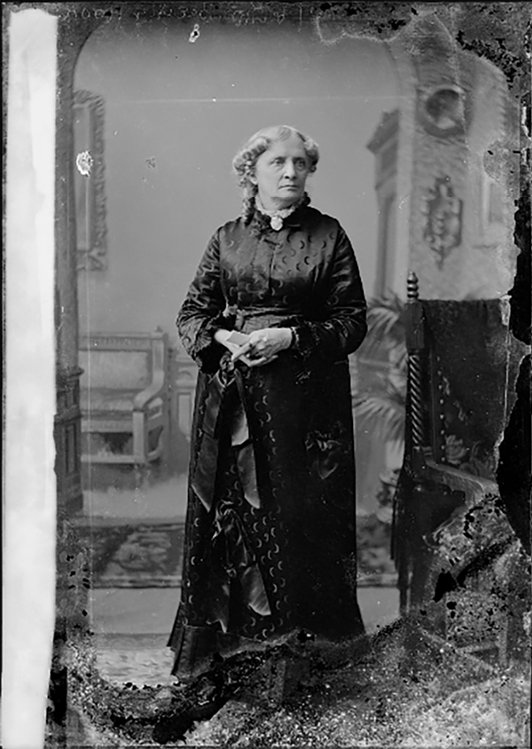
Figure 1. Photograph of Isabella Beecher Hooker. Source: C.M. Bell, photographer. Hooker, Mrs. Isabella Beecher, ca. 1916. Photograph. https://www.loc.gov/item/2016710995/.
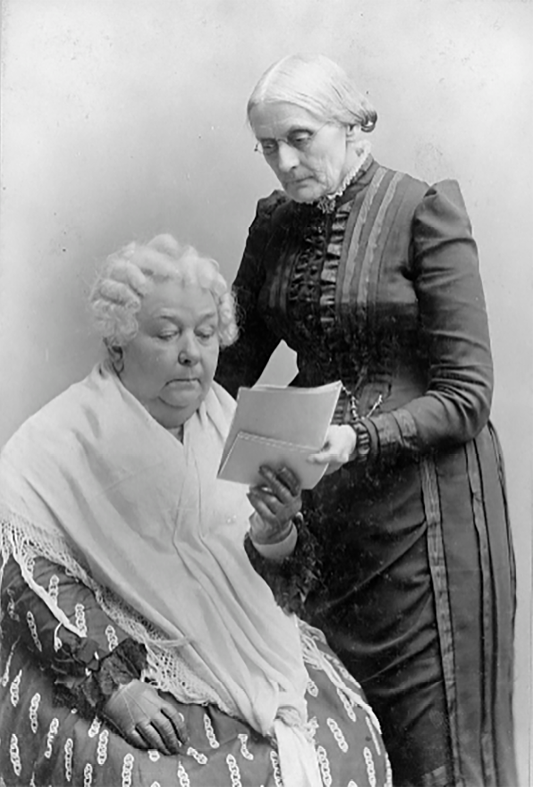
Figure 2. Photograph of Elizabeth Cady Stanton (seated) and Susan B. Anthony (standing). Source: Elizabeth Cady Stanton, seated, and Susan B. Anthony, standing, three-quarter length portrait [Between 1880 and 1902]. Photograph. https://www.loc.gov/item/97500087/.