Chapter 2. The OCOL Platform
Features
The OCOL platform is intended to be accessible to all people inside a country’s borders, regardless of their location or whether they have a library card, attend a school or university, or live near a public library. In fact, the whole point of this open library project is to move away from traditional practices (such as requiring elaborate patron authentication when logging in to use a library’s digital resources) and to introduce some new possibilities by taking advantage of a wide range of technological advances that now afford us the luxury of rethinking the notion of the library and the experience of using a library, while, of course, remaining sensitive to the issue of patron privacy (among other issues).
The platform could be accessed on any device, by using either the web-based version (see figure 2.1), ideal for laptops, or one of the two app versions (for Android and iOS devices), ideal for use on mobile phones and tablets. For each new OCOL library, a new version of the same app would be created and given a unique name. The LoC platform and app would serve as the blueprint for others. Each app (no matter how many are available simultaneously in the app stores around the world) would pull from the same site, but it would not necessarily display the same content. (This, of course, depends on agreements with publishers in various territories and on digital rights.) While the platform is designed to work best as a national library—that is, a library that is open to all people inside a particular country—it can be adjusted to fit smaller geographic areas (e.g., cities, campuses), although in the initial stages of IT development, this option is not yet available.
Users could enter the app in three unique ways:
- as completely anonymous readers (In this case, e-mail and password are not authenticated or needed. Users go in as guests and begin browsing and reading like other users. The downside of this approach is that the app, while it tracks readings of those users, is not able to remember what is read and how much of each publication is read.)
- by creating a user account with a unique (and authenticated) password (This is recommended for users who want to use the features of the app to the fullest while preserving their privacy as much as possible.)
- via social media (Google or Facebook)
The platform could be used in the Croatian or English language. (More languages were planned for later stages of IT development, including German, Spanish, Italian, and French, as these are the languages most often spoken by visitors to Croatia.) Upon entry into the web version, users would be greeted by participating libraries and sponsors (a short message appears in a small window in the upper right corner and goes away after a few seconds) and see a carousel of books pulled from a range of categories (these rotate daily with the goal of drawing attention to a wide range of publications before users begin their browsing journeys). Various characters (beyond the Roman alphabet) are supported to ensure accurate and precise searching.
Some unique features include the following:
- No purchasing—While each book receives a unique page inside the library displaying useful information to the reader (e.g., description, publisher, publication year), no price is included. Since LoC is not a bookstore but a library, it strives to honor the mission of a library in providing free reading to patrons, rather than serving as a marketing vehicle for book sales. Therefore, the user experience must resemble that of a library patron using library resources rather than a shopper visiting an online bookstore. This does not mean that, in our negotiations with publishers, we do not use various currencies (particularly US dollars and euros), as publishers are paid for participation (more on this in chapter 4), but it does mean that this information is both irrelevant and distracting to the library user.
- No ratings and reviews—While most reading platforms offer users reading recommendations (Amazon pioneered this decades ago) by drawing the user’s attention to the publications either by the same author or on the same subject or to other books read by users whose interests are similar to the user’s, OCOL reverses the process and does not provide reviews or recommendations. This means that users are not asked to rate books or write reviews after reading them. Studies have shown that such approaches, while helpful to some, have also had detrimental effects. In addition, reviews by reputable sources often found on book pages have long been a way for publishers to promote their own authors and interests, which may or may not be in line with what the user will ultimately like or need. The goal here is not to completely deny the value of reviews, but by not including such random and often highly subjective opinions, we encourage more reading and more independent thinking.
- “Edutising”—Sponsors are visible to users, but just enough to make the users aware who is paying for the content and the library’s IT maintenance and not to distract from reading by using various commercial tactics. In fact, the library does not allow any kind of selling activities. Sponsors can use only their logos in their subtle messages to users (placed either on the home page or inside one of the Channels), or they may actively participate in the reading by creating Profiles inside the library. These Profiles may include the content relevant to the sponsor, but again, the sponsor does not display ads selling products or messages. In a nutshell, OCOL aims to honor the definition of a library and not resemble a platform like YouTube, where users are constantly bombarded and interrupted with advertisements of all kinds. Since the nature of each sponsor’s presence is educational (rather than commercial), but still gives the sponsor an opportunity to effectively brand its organization, OCOL refers to this type of integrity sponsorship (and this type of marketing) as edutising (educational advertising).
- Public marginalia—The reading app includes a range of functionalities digital readers have come to expect from such platforms (including the ability to change fonts, size of letters, and background color; the option to use a font for dyslexic readers; the ability to remember where a reader stopped reading and to track reader’s time in the library), but it goes beyond the familiar to include a unique feature called public marginalia. This means that readers can notate various publications they access and make their notes private (visible only to them) or public (visible to other users when they access the same publication). A filter would allow users to report public notes that in some way violate the author’s or the book’s integrity.
- Distinct Profiles—There are several types of Profiles in the library: those of users, kept private and visible only to the user, and those of partners (i.e., sponsors), educators, and public figures, which are visible to other users of the library. Each of the three public Profiles plays a distinct role inside the library, with the common goal of enhancing the user experience by pointing users to the content of their interest.
- User privacy—The library strives to protect user privacy (as libraries have done for decades). To do that effectively, some compromises have to take place along the way. While it can be argued that reader privacy can never be fully achieved through use of any technology, users can be given more options.
In addition to these distinct features, many others are designed to enhance the user experience at various stages of browsing or reading, including, among others, the ability to filter searches by language and the option to see what percentage of the book is read inside the reader, at the bottom of each page (or how much reading is left before completing a title). The platform also features an i icon (which stands for information) located in various places (e.g., browsing page, Channel pages, book pages), which users can click to get more information about various features and functionalities that may not immediately be clear to them. Further, the OCOL app is built in such a way that it accommodates future expansion and the inclusion of multimedia and audio files (which would not be available at launch, as they require more storage capacity and bring a special set of challenges and issues).
As far as accessing the OCOL website (or app) outside of the geographic borders of the participating country goes—in this case, Croatia—users could still access or download it as there would be enough content on the platform that is available for free globally (e.g., many public domain titles and open access books), while licensed content would be visible only in places where there is an agreement with publishers. If publishers explicitly tell us in writing that they want the licensed content to remain open beyond the licensed territory (e.g., for promotional purposes), we can honor that request at any time. The technology allows us to “open” and “close” e-publications as needed.
When visitors leave Croatia to go back to their home countries, they would be able to continue reading the materials they enjoyed on their trip only if they weren’t licensed content open for reading only to the people physically inside Croatia. The app is not able at the moment to allow the reading of licensed materials for at least two or three weeks upon exiting the country—this would be a much better user experience as users would be allowed to finish what they started reading when returning to their homelands—but for security purposes, and to honor publishers’ wishes, as well as to control the OCOL budget, this benefit was added to the IT development wish list for future development phases.
OCOL also pays special attention to the safety of the digital files. DRM technology is included in every incarnation of the platform and the app (LoC is but a blueprint). This technology ensures that the appropriate content is available to the local audience, but the content also looks and feels global (in that the collection of publications is highly multilingual and diverse). In addition, the technology is designed to eliminate any friction and ensure a superior user experience. In essence, the reading app represents the library in which every type of reader feels welcome: lay reader, academic, high school student, university student, self-taught learner, and so on. Lastly, OCOL recognizes that while on the one hand, editorial filtering makes for a better collection (quantity cannot replace quality, and publications have to be carefully vetted before entering the library), on the other hand, OCOL also wants to promote a healthy dose of user judgment (in the belief that users know best what they want to read and how), so we do not want to completely eliminate the type of content that may be uncomfortable to some.
Lastly, the goal of OCOL is to promote reading as a highly personal experience, a journey on which the reader embarks voluntarily to discover new knowledge. The browsing element is highly sophisticated, and in order to enhance that journey, a book is not imposed on the reader. Instead, the reader enjoys the process of discovery and learns through it. It’s not about the relationship between those of us behind the scenes and the reader. It’s about the relationship between the reader and the content. The ultimate goal is for the reader to reach a point where they feel that everyone got out of their way.
Content
The OCOL platform includes a wide range of content and incorporates various format types as well as various subjects and categories. As OCOL’s mission is to present a national library that incorporates the features of various types of libraries (public, academic, research, specialized, school), the content must reflect this mission and grow over time to satisfy the needs of a diverse group of users—from elementary and high school children to students and scholars, and from lay local readers to tourists and visitors looking for literature in languages other than the native language. At the onset, LoC was going to include publications in several languages, not only the native Croatian (which was the priority), but also including the main languages—English, German, Spanish, Italian, French—and the regional languages that are spoken by large numbers of tourists and visitors traveling to Croatia each year (among them Serbian, Bosnian, Slovenian, Czech, Slovakian, and Hungarian).
Content types include books (for all ages), short stories (as stand-alone publications with unique covers), textbooks, professional literature, academic articles, academic journals, general articles and columns from newspapers, consumer magazines, guides and brochures for tourists and visitors, and audiobooks. The goal is to satisfy the reading appetites of a wide range of users: from recreational readers enjoying romance novels to elementary school children looking for school reads; from scientists and university professors looking for new research in their subject fields to business travelers.
At launch, OCOL’s content would be organized into various Channels (figure 2.2), which may be accessed directly from the home page (located just below the main image) or on the browsing pages inside the library. These Channels can change as needed, and at the outset would include the following: Fiction, Nonfiction, Short Stories, Poetry, World Classics, Travel Guides, Discover Croatia (exclusively for tourists), Magazines, Kids’ Corner (children’s literature, School Reads [required school reading for Croatian students grades 1 through 12]), Academic (for scholars and students of higher education), Croatian Classics, and Croatian Modern. The Channels that display on the home page in black-and-white would have a “Coming soon” label, as they were on the horizon but not yet ready to launch. The idea here was to give the user a taste of what’s to come. They included Textbooks, Audiobooks, Columns, Cookbooks, and Planet Teen. The choice of these additional Channels was not random; they were chosen because of the type of content we knew we could secure in the near future and the demand on the user side.
In order to ensure proper DRM protection and to inform and educate users about why and how the publications are freely available to them in the library (and why we do not guarantee that they will always remain in the library), all publications would carry one of four disclaimers, which correspond to one of four classifications of content types inside the library: public domain, open access, licensed, and self-published. This means that every publication page would display one of these four classifications assigned to each title and explain to the reader why and how each title is open to them to read without restriction and without pay. The text for each classification is as follows:
- Public Domain—This title is in the public domain, as the author or translator has been deceased for 70-plus years. We have made it available for reading in this territory because there are no legal restrictions as to how public domain titles may be used. If you have any reason to suspect this title is not in the public domain in this territory, please notify us. [Titles that carry a public domain classification may be downloaded and read offline.]
- Open Access—This title carries several Open Access licenses, which means it has been made available for reading by the organization that has sponsored its publication. This usually refers to academic literature published by universities and various institutions of learning. If you have any reason to suspect this title does not carry an Open Access license, please notify us. [Titles that carry an open access classification may be downloaded and read offline.]
- Licensed—This title is open for reading in this territory because its digital rights holder, usually the publisher, has signed an agreement with us regarding this and other titles in its catalog and has given us permission to open this title for reading in the library for a pre-determined amount of time. [Titles that carry a licensed classification can be accessed by readers only while online and cannot be downloaded. This ensures protection of copyright as this classification is used for commercial titles.]
- Self-Published—This title has been self-published through our platform and its author has agreed, before uploading the publication, to open it for reading in this territory. The author reserves the right to withdraw the title from the platform with a month’s notice to our editors and to the readers. [Titles that carry a self-published classification can be accessed by readers only while online and cannot be downloaded; this ensures the protection of copyright for commercial titles. They may be downloaded by readers only if the author gives prior consent.]
Pockets
Another unique feature that allows users to build their own mini-libraries inside the library is called Pockets. Pockets are collections of titles the reader builds on his or her own terms by adding books to previously created libraries, which the user can name, describe, and make public only if approved by the editorial team. The reason users cannot automatically make Pockets public is because when we initially allowed this feature in the first group of users (university students), who tested the platform in a focus group, we realized that most Pockets (created over the course of several days) were not complete, not helpful to other users, and not well written or organized. For this reason, we opted to allow Pockets to be public (i.e., visible to other users) only when they were created by partners and educators who our editorial team would help build useful, subject-oriented Pockets that would serve as educational tools or have mass appeal (e.g., Healthy Eating during Pregnancy; Great Fiction with Strong Female Leads; English-Language Classics Everyone Should Read in Their Lifetime; Biographies of Great Scientists; Pivotal Moments of the Twentieth Century; Managing Personal Finances).
These mini-libraries are a great way for readers to deepen their understanding of certain topics, authors, or fields and for those that make them public (e.g., influential authors, organizations, libraries) to showcase their knowledge of a subject, provide recommendations, or draw attention to certain themes, people, or events. Users may add titles to their Pockets while browsing or when visiting each publication’s unique page. Below the cover of each title, the user always has two options: to read the text or to add it to a Pocket (either an existing one or a brand-new one). If a user wants to make a Pocket public after investing time and effort into it, they can send it to editorial for consideration. If approved, that user’s Pocket becomes visible to all users in the library.
Profiles
There are four types of Profiles in the platform. The first is the User Profile, which is always private and visible only to the user; when visiting their Profile, the user is able to see all of their reading activities, opened titles, and created Pockets. The remaining three Profiles are usually public and visible to everyone. They are the following:
- Partner Profiles—The Profiles of those sponsoring the library. This is the space partners use to promote reading via their own prebuilt Pockets. These can be highly customized to include a unique top image, the logo of the sponsor, a brief statement about the organization, and a link to its website. Their goal is to allow partners as much exposure as possible by giving them a corner in the library where they can actively participate in the promotion of reading.
- Educator Profiles—The Profiles of teachers, professors, and other educators interested in engaging a targeted group of users, usually their students, by creating Pockets specific to various classes or coursework.
- Public Figure Profiles—The Profiles of highly influential persons, such as well-known authors, who use the library to promote their work or the work of other writers. These Profiles have mass appeal because they have the celebrity element, which attracts large followings.
Analytics
Measuring reading activities and gaining insight into how the platform is used form a crucial component of the OCOL idea. The focus, of course, is not on collecting the users’ personal information (reader privacy is guarded every step of the way) but on providing publishers, authors, libraries, and partners with valuable information about where interest lies and how best to monetize it. Publishers are, of course, most interested in knowing which of their own titles and authors are receiving the most attention and where, while sponsors and partners are most interested in knowing how many people at any moment are reading or using the library and where they are located (this helps them determine the value of their promotional and marketing activities and the return on investment of participating in edutising). Reports provided to participating publishers, authors, and sponsors include the following information:
- popularity of each title and or author (This can also be determined by the OCOL Impact Score, discussed in chapter 4.).
- performance of individual Channels in the library compared to overall reading statistics
- popularity of specific publication types (e.g., novels, short stories, columns) and of specific subjects and genres within categories or Channels (e.g., fiction, history, performing arts)
- parts of the country where the most reading takes place, clearly identified by city, county, specific location, or event (Note: No personal information is provided about readers, not even if they access the platform through their social media accounts, which would make it relatively easy to obtain such information.)
- time of day, week, or month when most reading takes place
Reading reports provided to publishers, authors, and sponsors are one part of the role and value of analytics. Others include built-in algorithms designed to assign value to publications via the OCOL Impact Score (more on its design and purpose in chapter 4), which is visible to all users at all times, and some advanced features that allow the internal team to track reading activities and monitor protection of the books (e.g., information about how many users log in anonymously vs. via social media or personal e-mail; types of books downloaded for offline reading and the frequency of those downloads; the frequency of public notes inside certain titles; etc.). The main goal here is not only to ensure that the platform stays stable and its content protected from any inappropriate or threatening activity but also to preserve the integrity of the library, which is to be used freely by anyone but which is designed in a way that asks every user to do their part and read both responsibly and respectfully.
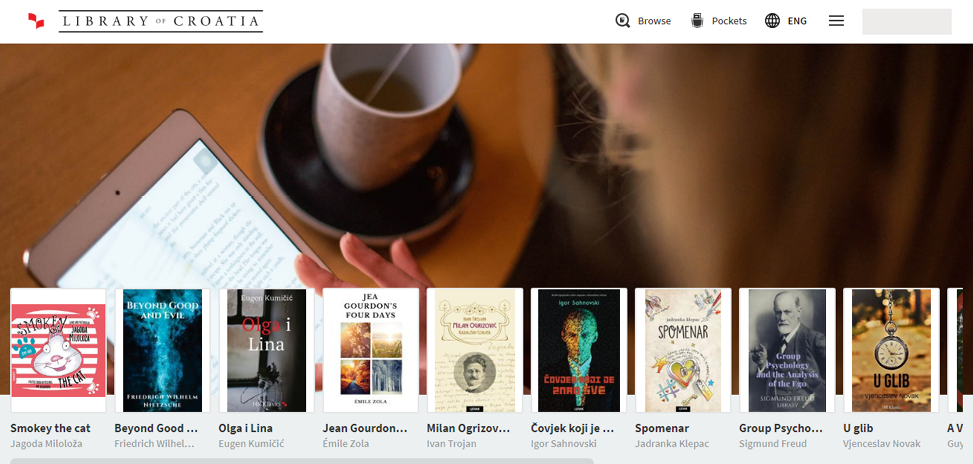
Figure 2.1
Home page of OCOL’s web-based version
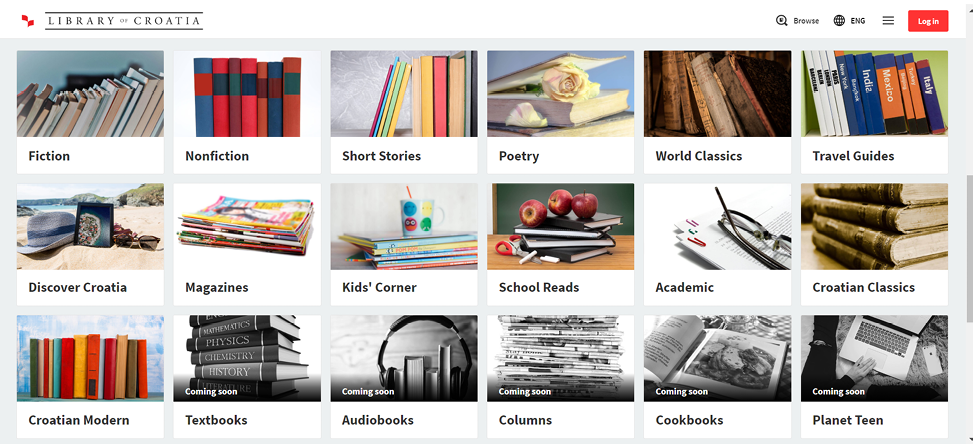
Figure 2.2
Channels as entry points on home page