Chapter 1. What Is a Library Engagement Platform?
People want connection—to be acknowledged and know you listened. They’re not looking to mimic real-world connections online. A company trying to position itself as a new best friend can come across as fake. But giving people a little nudge shows they are on your radar and is OK—in fact, it’s an important aspect of doing business online.
Here’s an example. Dillons is the local grocery store I usually visit. I have its store card and use it because I get discounts on purchases and on gasoline. The card offers good incentives by itself, but it’s not very personal; however, Dillons has upgraded its online presence to add a more personal connection. Because its online system requires me to set up an account and connect my store card to that account, Dillons keeps track of what I purchase. A few weeks after a purchase, the store often mails coupons to my house. Those coupons are customized: they are for items I have purchased in the past and are also for some products I might be interested in based on my past purchases.
If I order groceries online and use curbside pickup, Dillons also personalizes that experience. When I search the store website for items, Dillons puts the products I frequently purchase at the top of the page. For example, if I type “milk” in the search box, the search results page includes a suggestion for the specific brand and type of milk I usually purchase, with a handy “Add to Cart” button (figure 1.1).
When I check out online, I’m asked if I “Forgot something?” Then the website continues showing me products I frequently buy. I’m sure the goal is to get me to buy more. Dillons is ticking the boxes of being helpful and personal, so I don’t forget something that I want or need.
Adding those types of personal touches—displaying products I’m likely to buy, or providing specific discounts and coupons based on my past purchases—is a type of online engagement. Dillons’ digital engagement platform is a low-hanging-fruit type of engagement that builds loyalty because Dillons makes it easy for me to shop, both in person and online.
Library Engagement Platforms
Library software has come a long way from the early days of online union catalogs and databases. Today’s modern library utilizes one or more library engagement platforms with the goal of informing customers about upcoming events, wishing them a happy birthday, or inviting them to use their library card to check something out. These software-based platforms help the library and customer connect, through different types of interactions and prompts, using a variety of communication channels—including e-mail, text messages, and mobile phone notifications.
Today’s library needs a lot of customer-focused software and online services. There are obvious aspects, like an ILS (integrated library system) and a website. You can add products that engage customers, like automated direct e-mails, an events calendar, a way to register for an event or to reserve a meeting room, a mobile app, or a way for staff to view and use library data in a handy dashboard.
These types of offerings are a mishmash of software and services that help engage the library community. These engagement platforms may help nudge customers to action or help keep them informed. These platforms can also help keep the library informed, as well.
The end goal of a library engagement platform isn’t the messaging; it’s to engage customers and help them respond and interact with the library.
Definitions
Defining a library engagement platform can be difficult because these platforms are customized and unique (more on that in future chapters). I will share a broad definition so we are all on the same page.
First let’s define online engagement. Consider this definition of engagement marketing from Wikipedia:
Engagement marketing, sometimes called “experiential marketing”, “event marketing”, “on-ground marketing”, “live marketing”, “participation marketing”, “Loyalty Marketing”, or “special events” is a marketing strategy that directly engages consumers and invites and encourages them to participate in the evolution of a brand or a brand experience. Rather than looking at consumers as passive receivers of messages, engagement marketers believe that consumers should be actively involved in the production and co-creation of marketing programs, developing a relationship with the brand.
Consumer engagement is when a brand and a consumer connect. According to Brad Nierenberg, experiential marketing is the live, one-on-one interactions that allow consumers to create connections with brands. Consumers will continue to seek and demand one-on-one, shareable interaction with a brand.1
This definition applies to in-person as well as online engagement. The Duffy Agency has extended the concept of engagement into an Online Engagement Spectrum. It breaks down online engagement into these types of activities:2
- Visit: Essentially, people using your website, which increases web traffic.
- Consider: Visitors who stay and consume content. This increases analytics rankings like time on page, which is good for SEO (search engine optimization).
- Acknowledge: These are ways that website visitors can interact by using likes, ratings, favoriting, etc. They’re low engagement activities because it doesn’t take much to click a Like button but they do provide an acknowledgement that content was consumed.
- Contribute: Taking the time to reply, leave a comment, or chat online.
- Follow: Subscribing to your e-mail or RSS feed, which provides a passive channel of contact to these subscribers.
- Information: This is when someone submits personal 8data, like filling out a survey, which provides marketing intel.
- Permission: Submitting an email or a phone number, which enables further one-on-one contact.
- Create: Adding things that a customer has created or curated, like posts or pictures on their own website or social media channel.
- Amplify: When people share content with their proprietary audience and, in the process, promote brand awareness.
- Advocate: This means actively endorsing your brand to their proprietary audience, which, in addition to promoting awareness, also fuels understanding, interest, and trust in the brand.
- Convert: When the thing you asked your customer to do is actually done. For example, downloading, trying and/or buying something, or linking somewhere.
Examples of these types of interactions in a library setting would include things like leaving a comment on the library’s Facebook post or clicking Like on a photo in the library’s Instagram account. Another example is a customer visiting the library’s website, reading a blog post, and visiting a page about a library service. A customer finding out about a library event and sharing that event on their personal social media account is another example. All are different types of interactions and engagements.
Platform
We also need to define platform. Merriam-Webster’s dictionary (the online version) defines platform in a couple of ways:
- Computer or software platform: “the computer architecture and equipment using a particular operating system.”
- And the more general definition: “a device or structure incorporating or providing a platform.”3
Both definitions help us understand the concept of a platform. The idea is that someone builds a platform where other activities can happen. For example, if you have a deck in your backyard, that deck is a type of platform. Activities, like a party, or gardening, or reading a good book, can all happen on the platform. The platform (your deck) supports and facilitates the activities and actions.
That platform can also be in the cloud, in which case, it’s a platform as a service, or PaaS. That means the software part of the platform is housed on the internet, so the platform is a web-based platform, and people can build other products and services on top of that platform.
There are different types of software-based library platforms. Some are traditional. For example, a library catalog is a type of online platform, with the goal of helping people find items in our collections that they can check out. It’s a book- and content-finding platform.
Social media is another type of platform. For example, Facebook is a platform where people interact. You don’t think about the underlying platform when you use Facebook. You focus on content, scrolling through Facebook posts and perhaps clicking Like, adding a comment, or choosing to Share.
As you know, Flickr and Instagram are platforms built for sharing photos. When you take a photo and post it to Instagram, you are adding content to the platform. Other people can add other forms of content with Like or Comments.
YouTube, of course, is a video platform. You post a video, and people watch. They might click Like, share the video to a list (or to their network of people), leave a comment, or embed the video on their own platform.
Libraries are just starting to use a host of newer online activities. That’s where library engagement platforms fit into the mix. With this type of platform, the goal is for the customer to connect to the library, or maybe connect to staff in order to ask a question. Maybe the goal is to help connect on a deeper level. Instead of limiting connection to a traditional library catalog, that connection might be strengthened through personalized e-mail with links to books similar to those a customer has previously checked out.
A personalized e-mail is using a platform as a conduit to send reminders or “nudges” to move the customer to respond in some way. We might want the customer to check out a book or register for an event. Maybe we want them to sign up for our mailing list.
Putting these concepts together, a library engagement platform is an online, software-based solution that allows library patrons to connect and engage with the library through a series of interactions.
These platforms serve to make connections between the customer and our collections or between the customer and our library services. Library engagement platforms remind customers to use the library. In the process, these tools help keep our customers engaged and coming back for more.
What’s Next?
Here is what I will discuss in the rest of this publication:
- Chapter 2—Companies and Products: This chapter provides an overview of library engagement platforms currently available. Each software platform is introduced, target customers are described, and service and tool offerings are shared.
- Chapter 3—Types of Interactions: This chapter provides an overview of interactions offered with library engagement platforms. I also discuss why libraries might be interested in different types of software-based customer engagements.
- Chapter 4—Custom Options: Some companies offer customized services or offer broader marketing services that can be unique to each library. This chapter dives into those offerings and describes what each service provides.
- Chapter 5—Library Engagement Platforms’ End Goal: The final chapter focuses on the end results. I describe scenarios where these services and engagement platforms succeed and what that might look like to the customer.
Notes
- Wikipedia, s.v. “engagement marketing,” last updated July 14, 2021, 5:26, https://en.wikipedia.org/wiki/Engagement_marketing.
- “What Is Online Engagement? A Hands-on Guide That Looks beyond Tactical Engagement Tips to Define the Six Core Ways Brands Can Gain More Traction Online,” Duffy Agency, accessed July 19, 2021, https://duffy.agency/insight/what-is-online-engagement/.
- Merriam-Webster, s.v. “platform,” accessed July 19, 2021, https://www.merriam-webster.com/dictionary/platform.
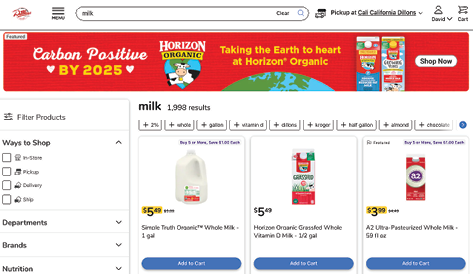
Figure 1.1
Don’t forget the milk!